Building Products,
Not Just Websites.
Diaa Elsadek — Full-Stack Software Engineer crafting scalable SaaS systems and modern web applications. Based in Egypt.
Developer Identity
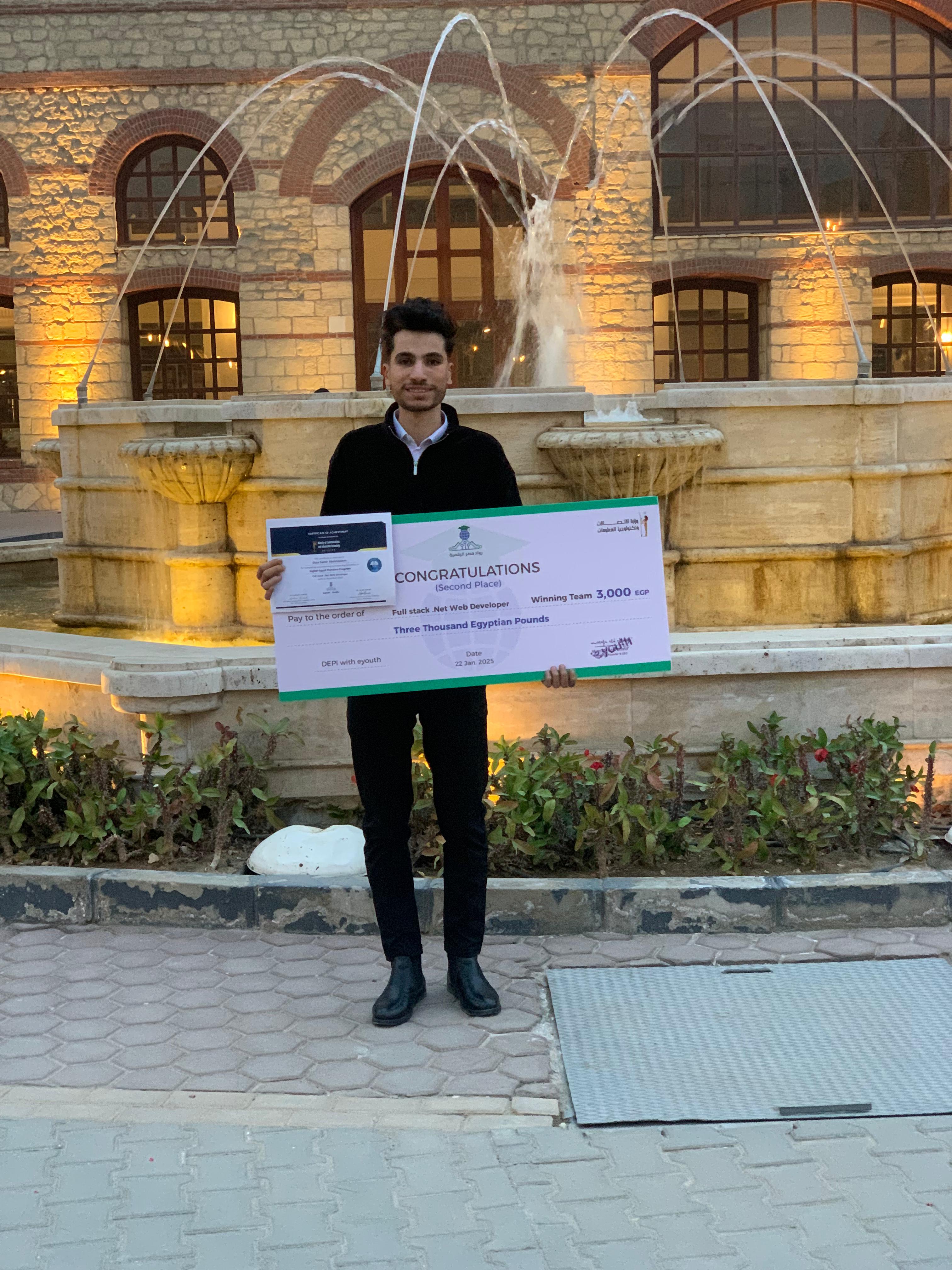
Diaa Elsadek
Full-Stack Software Engineer
Selected Work
EduCenter
SaaS platform for educators — Shopify for education.
Multi-tenant architecture with subdomain routing. Teachers launch their own educational businesses without building custom systems.
UniStream22
University streaming & educational content platform.
Built for scale with modern streaming architecture, real-time features, and optimized content delivery.
EduCenter
A SaaS platform that lets educators launch their own educational businesses — without writing a single line of code.
The Problem
Educators across the region face the same challenge: they have knowledge to share but no scalable way to deliver it. Most rely on scattered tools — WhatsApp groups, manual payment tracking, and shared drives. Building a custom platform costs tens of thousands of dollars and months of development. The result? Talented teachers are stuck, unable to grow beyond a handful of students.
The Vision
EduCenter is Shopify for education. Just as Shopify democratized e-commerce by letting anyone launch an online store, EduCenter lets any educator launch a complete educational business. No code. No infrastructure headaches. Each teacher gets their own branded subdomain — teacher.educenter.tech — and a full suite of tools to manage students, courses, payments, and analytics from day one.
Architecture Decisions
Multi-Tenancy
Each teacher operates in an isolated tenant with their own data, configuration, and branding. Shared infrastructure, isolated experiences. This allows the platform to scale to thousands of educators while maintaining data separation and security.
Subdomain Routing
teacher.educenter.tech instead of educenter.tech/teacher. Subdomains create professional identity for each educator, improve SEO, and enable independent SSL certificates. The routing layer resolves tenants at the edge for minimal latency.
Authentication & Authorization
Role-based access control across three levels: Admin, Teacher, and Student. JWT-based authentication with refresh token rotation. Each tenant has isolated permission boundaries — a teacher in one tenant cannot access another's data.
Database Architecture
Shared database with tenant-level isolation using compound indexes. Every query is scoped to the active tenant. This approach balances cost efficiency with data isolation, while maintaining the ability to run cross-tenant analytics at the platform level.
Interactive DNS & Subdomain Resolver
1. Choose Domain or Enter Custom Subdomain
2. DNS Resolving Flow
Waiting for simulation triggers...
Platform Capabilities
Engineering Tradeoffs
Shared DB vs. DB-per-tenant
Shared database reduces infrastructure cost by 80% at early stage. Tenant isolation is enforced at the application layer with strict query scoping. Migration path to dedicated databases exists for high-value tenants.
Subdomains vs. Path-based routing
Subdomains provide stronger brand identity and SEO isolation. The tradeoff is increased DNS complexity and SSL management, solved with wildcard certificates and edge-level tenant resolution.
Monolith-first vs. Microservices
Started as a well-structured monolith with clear module boundaries. This accelerates development velocity while maintaining the option to extract services as the platform scales. Premature microservices would have tripled development time without proportional benefit.
Future Roadmap
UniStream22
A university streaming and educational content platform built for modern learning environments.
The Problem
University students often struggle to access lecture recordings and educational content in a centralized, organized way. Scattered across Google Drive links, WhatsApp groups, and email threads — content becomes impossible to discover and navigate.
The Solution
UniStream22 provides a single, well-organized platform for streaming and accessing educational content. Organized by course, semester, and instructor — with optimized streaming, search, and a modern UI that makes learning content as accessible as Netflix.
Interactive Adaptive Bitrate Simulator
1. Select Network Environment
Stream Profile Quality
Medium Quality / Stable Streaming
Simulated Bandwidth
15 Mbps
Payload Bitrate
2400 kbps
Buffered Playback Time
Downloaded Segment Queue
Real-Time Streaming
Optimized content delivery with adaptive streaming quality. Built for low-latency educational experiences across varying network conditions.
University-Scale
Designed to handle concurrent access patterns typical of university environments — peak loads during lecture hours, exam periods, and content releases.
Performance-First
Aggressive caching strategies, optimized asset delivery, and server-side rendering for instant page loads. Core Web Vitals optimized from day one.
Accessible & Responsive
Fully responsive across all devices with accessibility built into the component architecture. WCAG-compliant interactive elements.
Systems, Scale & Architecture
The engineering decisions behind building scalable, maintainable systems. Every architectural choice is a tradeoff — these are the ones I've navigated.
Multi-Tenancy
Shared infrastructure with tenant-level data isolation. Each tenant operates independently with scoped queries, configurable branding, and isolated permission boundaries.
Subdomain Routing
Edge-resolved tenant identification via subdomains. Wildcard DNS with dynamic tenant resolution before requests hit the application layer.
Authentication
JWT-based auth with refresh token rotation and secure HTTP-only cookie storage. Session management with automatic expiration and re-authentication flows.
Authorization
Role-based access control (RBAC) with granular permissions. Admin, Teacher, and Student roles with tenant-scoped permission boundaries.
API Architecture
RESTful API design with versioning, rate limiting, and comprehensive error handling. Middleware pipeline for auth, tenant resolution, and request validation.
Performance
Server-side rendering, aggressive caching at CDN and application layers, database query optimization with compound indexes, and lazy loading for client bundles.
Clean Architecture
Layered architecture separating business logic from infrastructure. Domain-driven boundaries with dependency inversion. Controllers, services, repositories pattern.
Database Design
Schema design optimized for multi-tenant access patterns. Compound indexes for tenant-scoped queries. Aggregation pipelines for analytics across tenants.
Technology Ecosystem
Technologies are tools, not identities. These are the ones I reach for — chosen for specific problems, not hype cycles.
Frontend
Backend
Data
Languages
Tools
React
Core library for building declarative UI components. Utilizes virtual DOM diffing to coordinate state syncs at microsecond latencies.
Engineering Principles
Build for maintainabilityExpand
Code is read far more than it is written. Every function name, every module boundary, every abstraction is designed for the engineer who reads it six months from now.
Scale from day oneExpand
Architecture decisions compound. Building with scalability in mind from the start doesn't mean over-engineering — it means making choices that don't become bottlenecks.
Developer experience mattersExpand
Fast feedback loops, clear error messages, intuitive APIs. If the developer experience is painful, the product velocity suffers. DX is a multiplier.
Clean architecture over shortcutsExpand
Shortcuts save hours today and cost weeks tomorrow. Layered architecture, separation of concerns, and dependency inversion create systems that evolve gracefully.
Products before technologiesExpand
Technologies are means, not ends. The question is never 'should we use X?' — it's 'does this solve the user's problem better than the alternative?'
Systems thinking over feature thinkingExpand
Features exist within systems. Understanding how components interact, where data flows, and what fails under pressure matters more than shipping the next feature.
Long-Term Vision
I don't want to be an engineer who writes code. I want to be an engineer who builds systems that change how people learn, work, and create.
EduCenter isn't just a project — it's a thesis. A belief that technology should democratize access to education, that great software can level playing fields, and that one well-architected platform can empower thousands of educators who would otherwise be stuck with fragmented tools.
My long-term trajectory is clear: build products at the intersection of education and technology. Products that scale. Products that matter. Products where engineering excellence serves a purpose beyond itself.
Currently completing a Bachelor's in Computer and Information Science at HTI — 10th of Ramadan (2022–2026). Working as a freelance full-stack developer since 2024, building real products for real users.
Let's Build Something
Meaningful
Open to opportunities where engineering depth meets product ambition. If you're building something that matters, I'd like to hear about it.